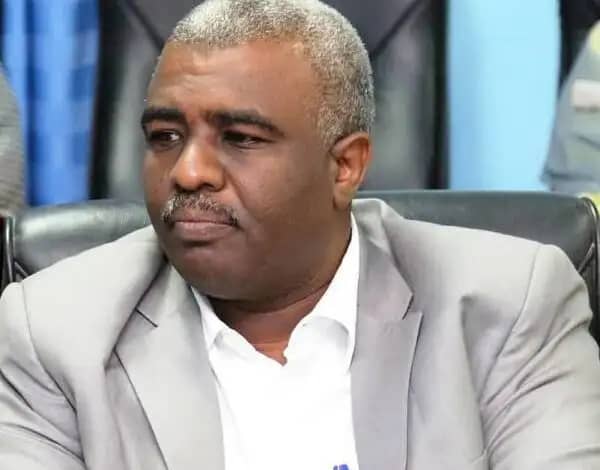
Last week, President Abdel Fattah al-Burhan issued a directive to form a supreme committee to support education in the country. This step came in response to challenges that have afflicted a sector exhausted by war, including the payment of teachers’ arrears and the maintenance of the school book printing press.
Despite the importance of these measures, they raise an important question that we attempt to answer in this article: Is Sudan’s education crisis merely a shortage of resources and infrastructure, or is it greater than that, tied to curricula and educational pathways that shape the minds of generations and the future of the nation, or is it a reflection of the state’s changing function over different eras?
Education in the modern state is not merely a social service; it is one of the most important tools for shaping society. Through the school, a system of values is formed, national awareness is developed, and the relationship between the individual and the state is built. Therefore, discussions about education should not be confined to teachers, books, and exams, but should extend to the fundamental question: what kind of citizens do we want to create?
In Sudan, this matter appears even more complex. The debate over education has oscillated between two opposing views. The first maintains that education still retains the quality of its outputs despite all circumstances, based on the successes of Sudanese university graduates abroad, particularly in medicine, engineering, and management, where many have excelled in graduate programs and in prestigious academic and professional institutions. These facts indicate that the education system, despite limited capabilities, has remained capable of producing minds that can compete globally.
The other view argues that these individual successes do not necessarily indicate the health of the education system, but rather reflect exceptional personal efforts.
This perspective points out that the real flaw begins in pre-university education, where curricula still rely heavily on memorization and rote learning, with a clear weakness in developing critical and research-based thinking. In such a system, students may graduate with excellent exam results, but without necessarily possessing the tools of scientific thinking capable of analysis and innovation.
Here lies the difference between education as a process of knowledge transfer and public education as a process of building awareness. Education provides the student with information and skills, while public education aims to shape the individual as a citizen who understands their rights and duties and participates in public affairs with awareness and responsibility.
When this vision is absent, curricula become merely textbooks that change with political eras. Sudan has witnessed repeated adjustments to curricula over past decades, many of which were more tied to ideological and intellectual conflicts than to a stable knowledge vision.
The result is that schools gradually lost their ability to perform their most important role: building shared national awareness. This partly explains the confusion and disorientation that Sudanese society experiences today in defining itself, its collective identity, and even its national project.
In any society, the school is not only a place of learning but also a space for building national identity. In a diverse country like Sudan, where cultures, dialects, and tribal affiliations vary, this role gains multiplied importance. The school can be the bridge that connects this diversity within a unified national framework, or, if the vision is absent, it may become an institution incapable of establishing this connection.
Amid Sudan’s war and divisions, education becomes one of the most important keys and anchors for national recovery and social cohesion. Reopening schools does not simply mean resuming studies; it means rebuilding the collective awareness of the new generations. Therefore, educational reform must go beyond urgent administrative remedies to consider its role within a broader state-building project.
This project, in turn, raises difficult questions: What philosophy of education does Sudan need today? Is the goal merely to produce certificate holders, to prepare a workforce capable of supporting the economy, or to build conscious citizens who participate in shaping the future?
International experiences indicate that countries that achieved rapid development viewed education as the foundation of the national project. In Germany, Japan, Malaysia, and Rwanda, educational reform was linked to expanding technical and vocational education and connecting it to the productive economy.
In other countries, subjects such as philosophy, logic, and modern studies were introduced to cultivate a critical mind capable of independent thinking.
In Sudan, any educational reform project will remain incomplete unless it start
s with the teacher. The teacher is the cornerstone of the educational process, and quality education cannot be discussed under professional and economic conditions that prevent them from performing their role.
The state leadership’s directive to form a supreme committee to support education is an important step, but it opens the door to the question of the state itself. A state that defines its vision for the kind of citizens it wants can build a clear educational system; when this vision is absent, education remains captive to temporary decisions and incomplete experiments.
According to #TheFaceOfTruth, education in Sudan is a question of how to rebuild national awareness after the social fabric has been fractured. In a country where dialects and tribal and political affiliations intersect, it is not enough for curricula to transmit knowledge; they must also teach generations how to think.
Introducing philosophy and logic into the educational process is essential for cultivating a critical mind capable of understanding differences without losing national belonging. Only then can education fulfill its true role: producing citizens whose awareness rises above divisions and laying a solid foundation for a state that is cohesive through knowledge, values, and belonging.
Stay well and safe.
Monday, March 16, 2026
Shglawi55@gmail.com