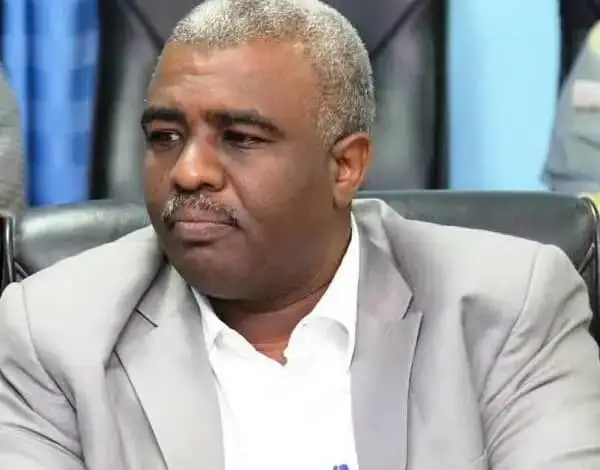
Why doesn’t Dr. Kamal Idris, the Prime Minister, seize the current political opportunity to redefine Sudan’s position in the regional and international arenas by employing political, media, and diplomatic pressure to end the war and classify the Rapid Support Forces militia as a terrorist organization?
There is an urgent need for Idris to launch a comprehensive initiative under the title “The Initiative for Peace and the Restoration of Security”, to be presented as a purely Sudanese alternative to the proposed ceasefire initiatives, and to be shared with a number of countries with balanced positions such as China, Russia, Turkey, Pakistan, Egypt, Saudi Arabia, Algeria, and Qatar.
The initiative is based on halting hostilities through the withdrawal of the rebels from Darfur and Kordofan, implementing the Jeddah Agreement, and ending external support to the militia—paving the way for a comprehensive political solution parallel to security arrangements. This would address the roots of the crisis, similar to the political settlement following the October 21, 1964 Revolution, thus restoring the initiative to internal hands and ending the monopoly of the false peace narrative by external actors.
To achieve this, the Prime Minister must adopt a comprehensive political vision grounded in a deep understanding of domestic balances and the regional and international power equations. The past experience has revealed the weakness of foreign policy, hesitation in positions, and the absence of a clear vision, all of which hindered the building of productive alliances that reflect the state’s interests and security.
The preoccupation with seeking Western approval, without diversifying partnerships toward rising powers such as China, Russia, and Turkey, has cost Sudan strategic opportunities that could have formed a diplomatic shield protecting it from external pressure.
International alliances are based on the logic of interests. Turkey, for example, has successfully balanced its NATO membership with strong relations with Russia and China, while India has pursued a multi-polar policy allowing cooperation with all major powers without compromising its independence. The same applies to Saudi Arabia and Qatar.
Meanwhile, Ethiopia, South Africa, and Rwanda in Africa have provided successful models in managing balance between East and West without compromising national decision-making.
Sudan, however, remains trapped in the Cold War mentality, inclined to align with a single bloc at a time when most countries pursue flexible, multi-polar policies. This flaw has weakened Sudan’s international standing and left the country without a protective umbrella against political and media blackmail.
On the legal front, the horrific crimes committed in the city of El Fasher have opened a window that can be smartly exploited. The statement by the UN Security Council and the Office of the Prosecutor of the International Criminal Court regarding RSF crimes represents a strategic opportunity for the Sudanese government to use international law as an effective pressure tool.
But turning this condemnation into a judicial process against the militia’s backers, especially those outside Sudan, requires organized and well-documented legal work—files containing names, companies, and evidence of financing and arming. If Sudanese judicial institutions take the initiative to submit such files, investigations could be launched to indict the militia and its regional supporters, ultimately leading to its classification as a terrorist organization.
The Sudanese government lacks effective digital communication tools, such as official accounts for the Prime Minister and the Sovereignty Council on platforms like X (Twitter). This weakens its presence in the media space where political battles are now fought. Such absence opens the door to rumors and undermines the state’s narrative before international public opinion. The ongoing war has revealed Sudan’s need for political and diplomatic strength to match its military superiority, as the country remains weak in rhetoric and political messaging.
The Sudanese army succeeded in preventing the state’s collapse, yet the absence of an active official discourse on the international stage allowed others to distort the image and impose misleading narratives. Although diplomatic engagement has recently begun to recover, pressure on Sudan persists without real accountability for the militia responsible for the war. Therefore, the “Government of Hope” must prove it is a national project for rebuilding the state with a clear vision, not merely a temporary management of the crisis.
What is required today is not hosting delegations or engaging in social activities, but establishing a “Diplomacy of War” capable of transforming battlefield pressure into a political card. This diplomacy must rest on key pillars:
First: The conflict must be redefined internationally as a state’s war against an externally supported rebel militia, not a civil war between two equal parties. This is the legal and political gateway that will reposition Sudan globally and enable the pursuit of accountability against the war’s financiers and perpetrators.
Second: What happened in El Fasher should not be left to human rights reports alone, but translated into documented files officially submitted to the UN Security Council, the International Criminal Court, and regional organizations—making law a political deterrent weapon, not just a tool of condemnation.
Third, and most importantly: Rebuilding foreign alliances on the basis of balance and national interest. Relying on a single bloc or awaiting Western positions is a strategic mistake. Sudan’s foreign policy should open up to emerging powers such as China, Russia, Turkey, and Malaysia, while strengthening Arab and African ties.
The diplomacy of war is not a justification for violence but a use of creative intellect. A state that fights without a message wastes its strength, and the one that unites arms with politics writes its future. The government’s success in merging military strength with political presence and media pressure can turn the crisis into a launching point toward an active foreign policy. The recent moves by Sudanese ambassadors abroad, through press conferences in defense of the nation, mark a late but vital step in mapping out resistance. This momentum must continue to awaken the world’s conscience and reclaim Sudan’s rights.
According to #Truth_Vision, Sudan needs an alert leadership with a strategic vision that combines firmness, prudence, and diplomatic intelligence, leveraging international law and global media to safeguard sovereignty and strengthen legitimacy.
Wishing you well and in good health.
Tuesday, November 4, 2025
Shglawi55@gmail.com