Khartoum is experiencing this week an unusual wave of international movement—delegations intersecting, envoys alternating, and major financial institutions suddenly returning to the scene. It appears to be part of a quietly forming reading that suggests major powers have begun to view Sudan as a file approaching transformation.
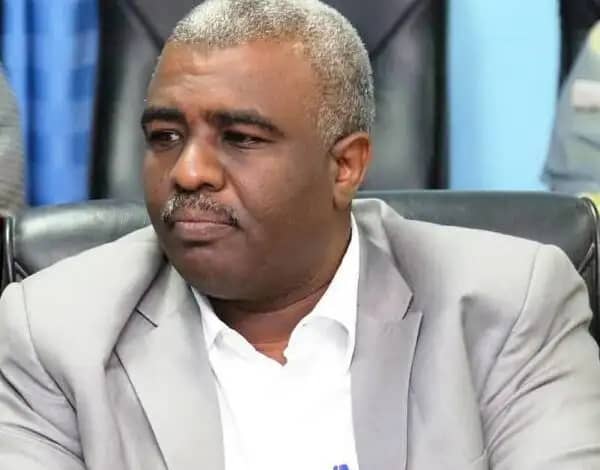
When the World Bank appears at this particular moment and meets with the Minister of Finance, Jibril Ibrahim, the matter goes beyond numbers and budgets to meanings not explicitly stated in official releases. In this article, we attempt to read this scene.
Sudan has witnessed in recent days an unprecedented diplomatic activity—visits by international envoys, some of them secret, and major financial institutions, in a scene reflecting the return of international and regional interest and the search for new approaches to deal with rapidly unfolding developments on the ground. While the personal envoy of the UN Secretary-General, Ramtane Lamamra, and the British envoy, Richard Croker, visited the country, a World Bank delegation arrived in the first high-level visit since relations were suspended in 2021, at a time when numerous regional and international capitals are moving to find a formula for peace in the country.
It is well known that the World Bank does not move far from American will or its vision of the future of states. The return of the delegation to Sudan reflects the beginning of a shift in the American outlook toward the “day after the war.” When Washington approaches, it only does so believing that the time to rearrange the papers has come, or that the balance of power on the ground has tilted toward a path that can be built upon. Yet the harder question inside remains: Does Sudan need World Bank loans at all? Or does it truly need a different development model?
The truth is that Sudan does not need more debts, which it has tried for decades and has learned how they can transform from soft support to rigid shackles governing policies and restricting choices. Sudan needs, before anything else, to redefine its developmental project on foundations that place trade policies as the leader and primary driver of the economy, while financial and monetary policies become servants of this direction, not controllers of it.
It needs an internal model driven by the aims of productivity, justice, and social solidarity, in which the state rebuilds its relationship with resources according to a vision that places the human being at the center of the development process—its leader, not its fuel or its margin.
In today’s world, crowded with greed and intertwined interests, the Sudanese economy will not rise without mutual dependency relationships with neighboring countries and major economic powers, through strategic participatory partnerships with giant states such as China, Turkey, or Russia. Partnerships based on mutual interests, not dictates; on technology, not dependency; on promising investment, not binding loans.
This, in turn, requires a radical reform of the economic and educational systems—restoring value to the experimental and technical sciences alongside the study of humanity and values—and establishing a productive knowledge economy that owns its tools rather than purchasing them ready-made from abroad.
The country also needs governance reform under the stewardship of the military institution, and an expansion of decentralization allowing each state to establish its own development model, so that the sum of local development becomes the backbone of national development.
The significance of the timing of the World Bank visit cannot be ignored. It comes just weeks before preparing the 2026 budget, amid a major decline in the value of the Sudanese pound, opening the door for these institutions to influence spending priorities, support policies, and economic liberalization. The timing offers a window for implicit pressure to insert “ready-made prescriptions” into the budget—prescriptions that may deepen financial and political dependency if the government does not assert its national will and place its developmental vision above all external considerations, mindful of the citizen suffering hunger.
And because international loans—no matter how their discourse is colored—have always been soft ropes for hard control, caution is necessary. All the countries that rose economically began first by freeing themselves from the World Bank’s debts before building their independent experience. The delegation’s visit today does not seem innocent of this context; it comes at a moment when Sudan is close to reversing the equation, as though what is required is to surround it economically after attempts at surrounding it militarily have failed.
The crowding of envoys and the return of the World Bank are not signs of diplomatic victory, but signals that the world is preparing for a new phase in Sudan and is trying to take an early seat at a table that has not yet been set. Yet this phase will not be determined by outsiders nor shaped by donors; it will take form through what the inside decides—its ability to overcome past mistakes and its readiness to build a developmental and political model that restores Sudan’s stature, dignity, and leadership role.
But the more important question lies within Khartoum itself: Are we before an opportunity, or another moment of international deception? Past experiences tell us that major powers do not grant stability to anyone; they grant it to those who can impose their equation and then stand with them once convinced that their interests will be protected. In other words, the American response to the day after the war is not a free acknowledgment of the Sudanese state but a test of its capacity to return as a real player among allies.
According to #Face_of_Truth, Sudan’s future depends on its ability to seize the initiative and refuse to be led through loans or “ready-made reform programs.” The countries that truly rise are those that know how to build themselves. And if Khartoum today is nearing the end of a war, it must begin another war: the war of hope, the war of policies, the war of liberation from dependency. That is the battle that will shape tomorrow and pave the way for a country worthy of being built by the hands of its people, not by the promises of institutions that span continents.
Wishing you well and in good health.
Wednesday, 3 November 2025
Shglawi55@gmail.com